
1.18 Million Workers Displaced While Earnings Estimates Soar — The Math Does Not Reconcile

The Intelligence Brief
Two forces are gutting the U.S. labor base at the same time. Neither is short-term. Neither is being modeled together by the firms selling you calm.
Vector One: AI Displacement — Fast, Not Gradual.
Goldman Sachs warned displaced tech workers directly: expect longer job searches and lasting pay cuts. This is not a cycle. It is a reset. Joseph Briggs, co-lead of Goldman's global economics team, named the "frontloading problem." Job losses meant to spread over a decade are now hitting in quarters.
The data backs this up:
| Metric | Value |
|---|---|
| Tech layoffs in 2026 (U.S.) | 121,072 jobs cut |
| Total WARN-filed layoffs in 2026 | 230,000+ layoffs |
| Firms filing WARN notices | 2,600+ companies |
| AI-cited job cuts (through May) | 87,714 jobs |
| Youth unemployment increase (ages 20–30) | +3 percentage points |
| Recent CS graduate unemployment rate | 6.1% |
| National unemployment rate | 3.6% |
AI was the top reason cited for layoffs four straight months in 2026. That comes from Challenger, Gray & Christmas data. Over 600 rounds of tech layoffs hit in 2025 alone. That is nearly 600 people per day. The trend has not slowed. It has locked in.
Vector Two: TPS Termination — 830,000 Workers Facing Removal.
On June 25, 2026, the Supreme Court ruled 6-3 in Mullin v. Doe. Federal courts cannot review DHS choices to end Temporary Protected Status. The White House has now moved to end TPS for seven countries. About 350,000 Haitian and Syrian workers got extensions measured in days — not months. Haiti's deadline: July 24, 2026. The other six countries: July 17, 2026.
These are not paper removals. These are 830,000 active workers in construction (130,000), hospitality (120,000), transport (110,000), manufacturing (85,000), and agriculture (15,000). They add roughly $29 billion in yearly wages to GDP. The Haitian group alone pays $1.56 billion in federal, state, and local taxes.
The ground truth: employers must reverify Form I-9 documents now. E-Verify is flagging affected workers. Firms that keep them face direct legal risk. There is no 90-day runway. There is no orderly exit plan.
I have run workforce cuts where pulling even 2-3% of a skilled layer caused months of chaos downstream. This is not a 2-3% trim. In Florida alone, 93,000 Haitian TPS workers serve hospitality, healthcare, and construction — sectors already short on labor.
The compound effect is what matters. One force strips knowledge workers from the top of the wage stack. The other pulls essential labor from the bottom. The middle — the service economy that needs both — is now exposed on two sides at once.
Nvidia made history—surging to a $5 trillion valuation, becoming one of the most powerful companies on Earth.
And while most investors missed out…
Those who bought early were rewarded with life-changing wealth.
But now, something new is brewing.
📈 BlackRock just invested $225 billion into the next wave of AI
📈 Warren Buffett plunked down $40 billion
📈 And one $20 stock could be at the center of it all
This isn’t a chipmaker. It’s something different.
And it may become the last retirement stock you’ll ever need.
Before the media catches on, you still have time to act.
The Tactical Event Blueprint
What the media claims: The economy is strong. S&P 500 earnings growth is set at 23.4% for Q2. Full-year 2026 estimates reach 26.4% — the best profit year since 2021. GDP growth holds at 2.25–2.6%. Tech alone posts 65.5% profit growth this quarter.
What is really happening at the capital layer: A timing gap is hiding a compound labor breakdown.
Goldman's own research spells out the math:
| Capital Layer | Labor Layer |
|---|---|
| Gains land in 2–3 quarters | Losses hit on a 2–4 quarter lag |
| $660 billion AI capex boosts GDP | 121,072 tech jobs cut in 2026 |
| Profits flow to shareholders | Unemployment set to rise to 4.5–4.8% |
This opens a 6–12 month window. Headline GDP looks solid while laid-off workers burn through savings and drop out of the data entirely.
Now stack the TPS shock on top. Those 830,000 workers will stop earning, stop paying taxes, and stop spending — but the hit will not show in GDP until late 2026 or early 2027.
The service sector multiplier ties both vectors together. Goldman estimates that each tech job lost puts 3–5 service jobs at risk. The 40,000 Bay Area tech workers cut in 2025 could ripple into 120,000–200,000 job losses across all sectors by 2027. Now add the loss of 120,000 hospitality workers and 130,000 construction workers from TPS cuts. The multiplier stacks in both directions.
How to position: Today's earnings surge is real but out of sync with the labor shock ahead. The gap will show up in regional fiscal stress, weaker consumer spending, and rising vacancy rates starting Q4 2026.
Trump's new tech bill could put quadrillions (AD)
The single largest wealth shift since 1973 may be days away.
It's all thanks to Trump's new tech bill…
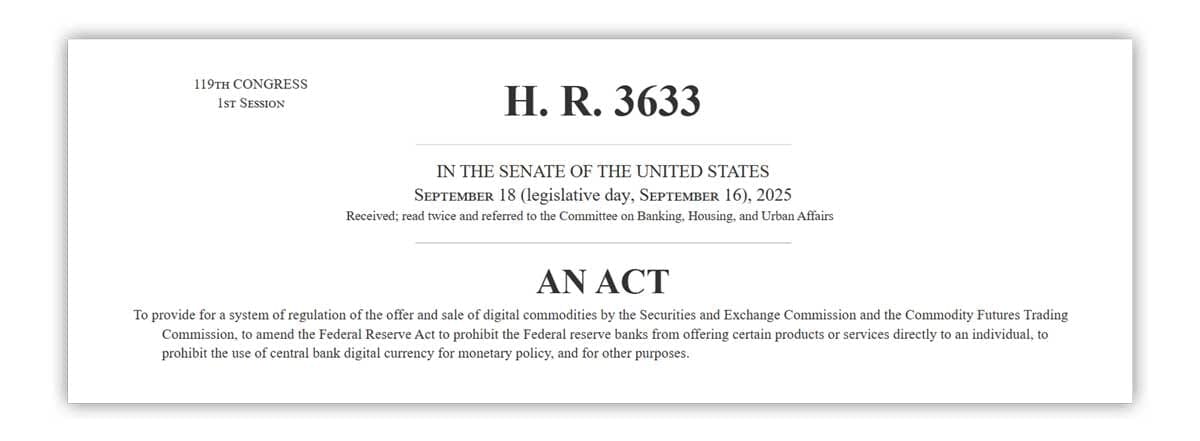
Which could put quadrillions of dollars in reach of everyday Americans...
The Sovereign Directive: What This Means for Your Capital
Strategic Capital Placement — Framework, Not Prescription
I am not posting a specific trade today. This is a macro framework. That line matters.
The logic is simple. When two separate forces hit the same layer — labor — the fallout is not just added together. It multiplies. And it arrives late.
Here is how I am framing my analysis for the quarters ahead:
Sectors to Watch for Decay:
- Regional banks tied to Florida, Texas, and California real estate where TPS workers cluster most. Vacancy rates and loan defaults will lag by 2-3 quarters.
- Hospitality and leisure firms that rely on labor pools now facing legal removal. Wage costs in these sectors will spike as supply shrinks against fixed demand.
- Consumer discretionary names with revenue tied to metro areas hit by both tech and TPS workforce losses.
Sectors That Are Masking Risk:
- Mega-cap tech posting 65.5% earnings growth while running the same layoffs that feed the downstream multiplier. The profit is real. The health of the consumer base funding future revenue is not being tested.
The Structural Takeaway:
The market is pricing $660 billion in AI spending as pure growth. It is not pricing the removal of over one million workers from the economy across two channels at once. Capital grabs gains fast. Labor absorbs losses on delay. That delay is your edge — and your risk window.
For Individual Sovereigns guarding capital through this cycle, the directive is clear: do not treat headline GDP or total earnings growth as proof that the base is sound. The base is shifting beneath the surface. The data that proves the crack will land in Q4 2026 and Q1 2027.
Set your capital for the reality after the lag — not the high that comes before it.
This is not gloom. This is field awareness. The gap between the two is the gap between an employee and a sovereign.
In partnership with Behind the Markets
Trump goes "all-in" on Grand Canyon energy breakthrough
Because last June, a drilling crew working right near the Grand Canyon…
Unearthed a well of clean energy producing almost 8 times the output of the largest oil well in Saudi Arabia…
Capable of powering civilization for two million years.
Right here on American soil.
Go here now for the Grand Canyon breakthrough ticker>>
Disclaimer: This analysis is for educational purposes only and should not be considered investment advice. Always do your own research before making investment decisions.
Items marked with an asterisk (*) are promotional and help support this newsletter at no cost to readers.