Floating-Rate Leverage Meets Structural Reality: A Sovereign Briefing
I have seen this pattern before. I sat in a boardroom where the word "refinancing" shifted from routine to urgent in a single quarter.
What is happening now in leveraged credit is not a shock. It is the direct result of a rate mismatch. That mismatch was clear to anyone who read the fine print behind the $2 trillion private credit sector.
Here is what the media tells you: private credit paid strong yields, the economy dodged a recession, and inflation is cooling.
Here is what is really happening at the capital layer: $344 billion in leveraged loan debt comes due between 2026 and 2028. That is the largest three-year wall in LSTA history. About 52% of those loans are rated B- or lower. These are not strong firms with pricing power. These are firms that got their loans when the Fed funds rate was near zero.
As one senior credit analyst told CNBC last week: "Nobody underwrote for that."
The floating-rate design that made private credit appealing in a rising-rate world has become its own stress test. Borrowers are not failing in droves — not yet. But the early warning signs are lining up in the exact order they always do before defaults spike:
| Stress Signal | Status |
|---|---|
| Maturity extensions | Active and growing |
| PIK (payment-in-kind) interest | Rising across portfolios |
| Sponsor equity injections | Selective, not broad |
| Covenant relief requests | Speeding up |
This is not a guess. This is the visible sequence. If you hold high-yield bonds, leveraged loan ETFs, or BDC shares, this sequence is already shifting your risk profile — whether you see it or not.
It’s that EnergyX has the inside track in the lithium race.
When General Motors saw a lithium supply crisis, they signed a strategic partnership with EnergyX. When the U.S. Army decided to place a commercial lithium processing facility on military land, they picked EnergyX to operate it. And when 50,000 people saw a $1B unicorn, they invested.
Now you can join them.
EnergyX's patented technology recovers lithium up to 3X more efficiently than traditional methods, 500X faster. Now they’re preparing to unlock as much as 15M+ tons of lithium.
With lithium demand projected to grow 5X by 2040, and the defense sector is now joining EVs, AI, and robotics as a driver of demand for this critical mineral, the timing couldn't be more urgent.
Invest in EnergyX by July 16.
Disclaimer: Energy Exploration Technologies, Inc. (“EnergyX”) has engaged Dynamic Industries to publish this communication in connection with EnergyX’s ongoing Regulation A offering. Dynamic Industries has been paid in cash and may receive additional compensation. Dynamic Industries and/or its affiliates do not currently hold securities of EnergyX. This compensation and any current or future ownership interest could create a conflict of interest. Please consider this disclosure alongside EnergyX’s offering materials. EnergyX’s Regulation A offering has been qualified by the SEC. Offers and sales may be made only by means of the qualified offering circular. Before investing, carefully review the offering circular, including the risk factors. The offering circular is available at invest.energyx.com. Comparisons to other companies are for informational purposes only and should not imply similar results.
The Intelligence Brief: Rate Regime, Sticky Inflation, and the CEO Signal
The big-picture backdrop is not giving leveraged credit the relief it needs.
Core U.S. inflation printed at 4.2% in May. The PCE — the Fed's preferred gauge — sits at 4.1%. Both are more than double the Fed's 2% target. The Conference Board's chief economist has said plainly that 2% inflation is not likely before 2028.
The Fed's June minutes showed that nearly all officials would raise rates if inflation stays high. The drivers: AI-linked demand, Middle East energy shocks, and tariff costs still flowing into consumer prices. The New York Fed's own survey confirms that 44% of makers and 47% of service firms still plan to raise prices.
Meanwhile, signals from corporate leaders are getting worse:
| Metric | Reading | Trend |
|---|---|---|
| Conference Board CEO Confidence | 47 (below 50 = net negative) | 🔻 Down from 59 in Q1 |
| Vistage CEO Confidence Index | 84.2 | 🔻 Down 3.5 points |
| NFIB Small Business Optimism | 97.4 | 🔺 Up 2.1 pts (but inflation is top concern) |
| Small Business Ch.11 Filings (H1 2026) | 1,663 | 📈 Up 50% year-over-year |
The pattern is clear. Headline optimism shows small gains. But inflation has retaken the top spot as the single biggest problem for 21% of small business owners. That is the highest since October 2024.
For Individual Sovereigns, this overlap matters. Sticky inflation. A Fed leaning toward hikes. CEO confidence below neutral. Together, they mean one thing: the cost of capital is not dropping. Any position built on rate cuts is out of line with reality.
Trump's new tech bill could put quadrillions (AD)
The single largest wealth shift since 1973 may be days away.
It's all thanks to Trump's new tech bill…
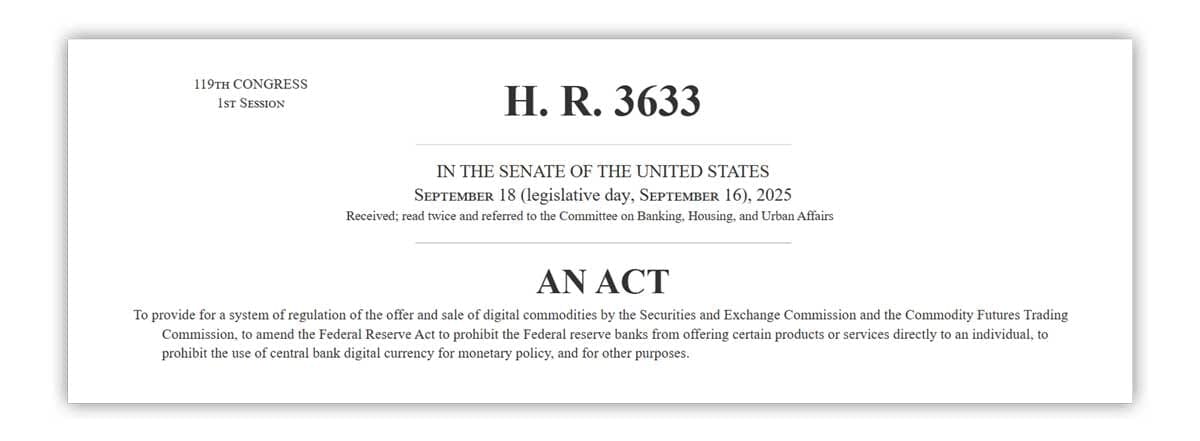
Which could put quadrillions of dollars in reach of everyday Americans...
The Sovereign Directive: Positioning Capital Against the Refinancing Cliff
I do not issue directives based on feeling. I issue them based on cause and effect.
Cause: A record $344 billion maturity wall is meeting a rate world these borrowers were never tested against. Real long-term rates, per the IMF's latest outlook, will average 50 basis points higher through 2027–203 than in 2024. BNP Paribas research has concluded the upward reset in real rates is "probably not done."
Effect: Credit gaps will widen fast. The split between firms with real cash-flow strength and those surviving on covenant relief and PIK deals will grow into a chasm. This is not theory — it is already visible.
Spread compression pushed weighted average nominal spreads to S+319. That is the lowest since the Global Financial Crisis. It creates a false sense of safety.
Here is the Sovereign Directive for this cycle:
1. Audit your credit exposure now. If you hold BDC shares, leveraged loan funds, or high-yield ETFs, find the portfolio's average credit rating. Any heavy B- or CCC weight sits right in the path of the refinancing cliff.
2. Choose cash-flow clarity over yield. Defensive, non-cyclical sectors with real pricing power are the only lasting positions in a higher-for-longer regime. The yield on a stressed credit instrument is not income. It is a risk premium you may never collect.
3. Keep cash reserves elevated. One scenario model puts a 7% chance on a sharp repricing shock across corporate debt. Those odds look small on their own — but the impact would be severe. Cash is not idle capital. Cash is optionality.
4. Reset your operating thesis. The low-rate era is not coming back. The data is clear. Demographic shifts and sovereign funding needs will keep real rates high. Every capital move you make from here must be built for the rate regime that exists — not the one that expired.
I spent years watching leadership teams delay hard talks until the capital structure forced the issue. Individual Sovereigns do not get a board-level rescue package.
Your capital structure is your duty. Audit it. Stress-test it. Position it for the world that is here — not the one the market priced three years ago.
In partnership with Behind the Markets
Trump goes "all-in" on Grand Canyon energy breakthrough
Because last June, a drilling crew working right near the Grand Canyon…
Unearthed a well of clean energy producing almost 8 times the output of the largest oil well in Saudi Arabia…
Capable of powering civilization for two million years.
Right here on American soil.
Go here now for the Grand Canyon breakthrough ticker>>
Disclaimer: This analysis is for educational purposes only and should not be considered investment advice. Always do your own research before making investment decisions.
Items marked with an asterisk (*) are promotional and help support this newsletter at no cost to readers.