
The $344 Billion Maturity Wall Nobody Underwrote For

Three events hit at once this week. None are getting the linked review they demand.
Fracture One: The $2 trillion private credit sector is now in a real stress cycle. Floating-rate borrowers — the core of private credit — pay near-peak rates. The market prices hikes, not cuts. Core U.S. inflation printed 2.9% year-on-year in May. That is the highest since September 2025. The Fed's latest dot-plot leans toward one rate hike this year. As CNBC noted this week, insiders now say openly: "Nobody underwrote for that."
Fracture Two: The leveraged loan maturity wall for 2026–2028 sits at a record $344 billion. Roughly 52% is rated B- or lower. This is the largest three-year pile-up in LSTA history. The weakest borrowers face tighter rules just when they need slack most.
Fracture Three: The 21st Century ROAD to Housing Act became law on July 12. It passed without a signature after a 43-day shutdown — the longest on record. That shutdown cost roughly $15 billion per week. The CBO says about $11 billion in activity was lost for good.
The media treats these as three separate stories. They are not. They are three pressure readings from one system. Borrowing costs rise. Refinancing windows shrink. Relief from Congress arrives too late to fix damage already done.
Here is the brief.
It’s that EnergyX has the inside track in the lithium race.
When General Motors saw a lithium supply crisis, they signed a strategic partnership with EnergyX. When the U.S. Army decided to place a commercial lithium processing facility on military land, they picked EnergyX to operate it. And when 50,000 people saw a $1B unicorn, they invested.
Now you can join them.
EnergyX's patented technology recovers lithium up to 3X more efficiently than traditional methods, 500X faster. Now they’re preparing to unlock as much as 15M+ tons of lithium.
With lithium demand projected to grow 5X by 2040, and the defense sector is now joining EVs, AI, and robotics as a driver of demand for this critical mineral, the timing couldn't be more urgent.
Invest in EnergyX by July 16.
Disclaimer: Energy Exploration Technologies, Inc. (“EnergyX”) has engaged Dynamic Industries to publish this communication in connection with EnergyX’s ongoing Regulation A offering. Dynamic Industries has been paid in cash and may receive additional compensation. Dynamic Industries and/or its affiliates do not currently hold securities of EnergyX. This compensation and any current or future ownership interest could create a conflict of interest. Please consider this disclosure alongside EnergyX’s offering materials. EnergyX’s Regulation A offering has been qualified by the SEC. Offers and sales may be made only by means of the qualified offering circular. Before investing, carefully review the offering circular, including the risk factors. The offering circular is available at invest.energyx.com. Comparisons to other companies are for informational purposes only and should not imply similar results.
The Intelligence Brief: Private Credit and the Refinancing Cliff
The private credit story has flipped. For three years, higher rates were sold as a yield boost for floating-rate lenders. That pitch is now under direct attack.
The logic is simple. When base rates rise, floating-rate coupons rise too. Short-term, that helps lenders. But when rates stay high past what was planned — and the market now prices more hikes — the borrower's ability to pay erodes.
The stress signs are no longer theory. They show up in a clear order: maturity extensions first, then PIK interest, then sponsor cash injections, then covenant relief.
PIK deals need close watch. These let borrowers skip cash payments. Instead, owed interest gets added to the loan balance. On paper, the lender's yield looks fine. In reality, cash flow has stopped. The borrower stacks debt on debt. This is not flexibility. This is distress dressed in formal language.
The Sikich credit update confirms the backdrop. Primary loan issuance fell 24.5% year-over-year to $1 trillion in 2025. CLO issuance hit a record $208.8 billion. That adds a buffer. But the core problem is the maturity wall.
| Metric | Value |
|---|---|
| 2026–2028 Maturity Wall | $344 billion (record) |
| Rated B- or Lower | ~52% |
| 2027 Maturities (YoY Change) | Down 63% to $50.4B |
| 2028 Maturities | $288B (elevated) |
| Leveraged Loan Market Size | $1.55 trillion (record) |
The firms most at risk have thin coverage ratios and weak pricing power. They have no room to absorb high rates for long. Real estate borrowers and consumer firms serving lower-income buyers face the worst squeeze.
For sovereigns holding BDC or private credit fund stakes: audit your exposure now. Check the PIK ratios. If a fund's reported yield leans more on non-cash PIK income than on real cash received, that yield is a guess — not a paycheck.
Trump's new tech bill could put quadrillions (AD)
The single largest wealth shift since 1973 may be days away.
It's all thanks to Trump's new tech bill…
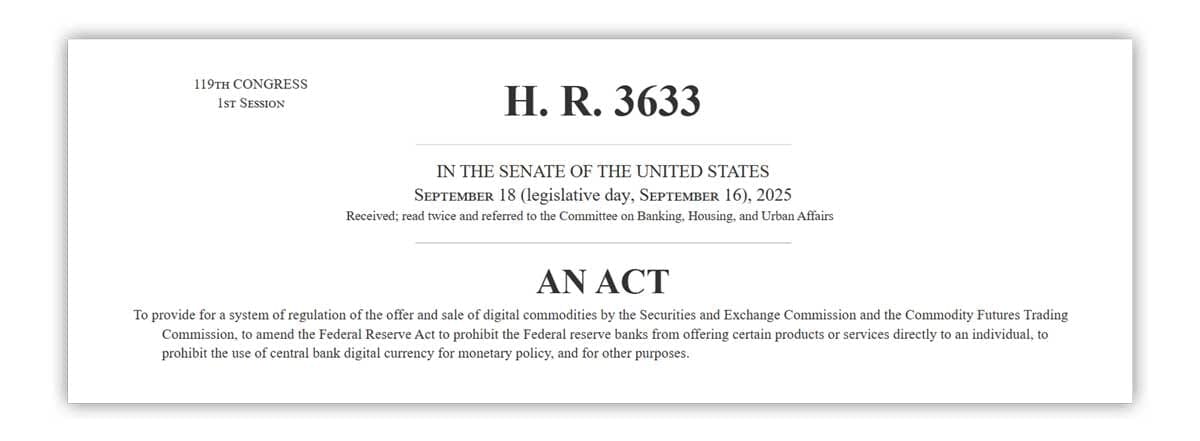
Which could put quadrillions of dollars in reach of everyday Americans...
The Tactical Strike: Housing Law Meets Capital Reality
The 21st Century ROAD to Housing Act is now law. The media spin is on script: bipartisan win, historic reform, relief for buyers.
Here is what is really happening at the capital layer.
The law holds 47 provisions aimed at boosting supply. These include manufactured housing incentives and office-to-apartment conversions. They include ADU financing and a cap that blocks large investors owning over 350 single-family homes from buying more. Goldman Sachs estimates looser zoning rules could add 2.5 million units over ten years.
None of this fixes the near-term bind. Mortgage rates sit at 6.49% this week. The 10-year Treasury yield stays high. Bond markets price in Middle East conflict, sticky inflation, and possible Fed hikes. Zillow projects rates drifting to about 6.3% by year-end. That is still above where buyers found relief in late 2025.
Existing home sales fell 2.4% month-over-month in June. That drop came during what should be peak season.
| Housing Metric | Current Status |
|---|---|
| 30-Year Fixed Mortgage | 6.49% |
| Year-End 2026 Rate Forecast (Zillow) | ~6.3% |
| Existing Home Sales (June MoM) | Down 2.4% |
| Institutional Investor Purchase Cap | 350 single-family homes |
| Estimated Units from Zoning Reform | 2.5M over 10 years |
The law is sound in its long-term aim. But building takes years. Federal agencies tasked with rollout are already short-staffed. The 43-day shutdown created a data gap. That gap still clouds the Fed's view of real conditions.
For sovereigns weighing real estate exposure: the law is a positive signal. But rates remain the binding limit. Do not confuse a supply-side plan with near-term price relief.
The Sovereign Directive: Positioning Through Convergence
Three fractures. One posture.
First: Audit private credit exposure now. If you hold BDC stakes or private credit interval funds, pull the latest filings. Find the share of income from PIK deals versus cash interest. Rising PIK ratios are not yield. They are deferred risk piling up on the balance sheet. Aberdeen analyst Nicole Reid put it clearly: "Defensive, non-cyclical sectors with good cash-flow visibility remain better positioned." If your holdings sit in cyclical, rate-sensitive borrowers, your risk profile has shifted since you entered.
Second: Respect the maturity wall timeline. The $344 billion refinancing pile-up through 2028 will split the market. Strong borrowers will refinance early. Weak credits will face rejection or harsh terms. This split creates openings for sovereigns active in the secondary loan market. It also matters for those reviewing CLO equity tranches. But only with deep due diligence on the credits beneath.
Third: Treat the housing law as a multi-year build, not a trade. The framework points the right way — more supply, modern manufactured housing, investor caps. But rates set the timing. With mortgages near 6.5% and the Fed's path unclear, housing plays need patience in years, not quarters.
The shutdown's data gap adds to the fog. Municipal credits tied to federal jobs and funding deserve a close watch. Morgan Stanley confirms most sectors hold enough reserves for short-term strain.
The summary: Cut exposure to floating-rate vehicles showing PIK stress. Stay defensive in non-cyclical cash-flow names. Treat housing reform as a long-duration thesis. When three fractures hit at once, the sovereign response is not panic. It is precision.
Capital does not protect itself. You do.
In partnership with Behind the Markets
Trump goes "all-in" on Grand Canyon energy breakthrough
Because last June, a drilling crew working right near the Grand Canyon…
Unearthed a well of clean energy producing almost 8 times the output of the largest oil well in Saudi Arabia…
Capable of powering civilization for two million years.
Right here on American soil.
Go here now for the Grand Canyon breakthrough ticker>>
Disclaimer: This analysis is for educational purposes only and should not be considered investment advice. Always do your own research before making investment decisions.
Items marked with an asterisk (*) are promotional and help support this newsletter at no cost to readers.