
The Regulatory Architecture Reshaping Digital Identity — And Your Capital Position

A pattern is forming on two continents. The press calls it a social policy debate. It is not. It is a capital buildout. The demand drivers are clear. The winners are easy to spot. The losers face real margin pain.
Here is the sequence.
What the media claims: Governments want to protect children from social media.
What is really happening at the capital layer: The EU, U.S. Congress, and at least ten EU member states are all pushing age checks, safety rules, and strict data handling at the same time. Every major platform must now rebuild core systems — or face fines, personal liability for leaders, and loss of market access.
On July 13, EU President von der Leyen backed a ban on social media for children under 13 across the EU. Member states can set higher limits. France set its floor at 15. Spain is pushing 16. Greece turns on its rules January 1, 2027. The EU Culture and Education Committee adopted a report calling for personal liability for platform leaders who fail to comply.
In the U.S., the KIDS Act — a 14-bill package with COPPA 2.0 rules — passed the House on June 29, 2026, by a vote of 267 to 117. It extends privacy shields to users under 17. It swaps the old "actual knowledge" test for one based on "knowledge fairly implied by facts." The FTC's 2025 COPPA Rule changes already took effect. The deadline passed in April 2026. Fines run up to $53,088 per breach.
This is not a policy chat. This is a buying cycle.
Every platform in these markets — Meta, TikTok, Snap, YouTube, gaming firms, AI tools, messaging apps — now faces a simple choice. Build compliant age checks and safety systems. Or lose access.
The EU expert panel's biggest move is flipping the burden of proof. Platforms must now prove their services are safe for kids before granting access. Adult features stay off until age checks work. That is not a soft guideline. It is a hard mandate. It turns optional spending into required outlay.
The global identity checks market shows this shift. It is set to hit $15.78 billion in 2026. It will grow to $26.8 billion by 2031 at an 11.18% CAGR. That growth is not based on guesses. It is being written into law.
Breaking news,
Apple just secretly added Starlink satellite support to iPhones through iOS 18.3.
One of the biggest potential winners?
Mode Mobile.
Just about everything Elon touches turns to gold:
- SpaceX IPO at $1.77T
- Tesla up 30,000% since IPO
- And now - every iPhone gets satellite access
But while Wall Street focuses on Apple, Mode Mobile is quietly positioned to capitalize on this global satellite revolution.
Their EarnPhone technology already:
- Reaches 490M+ users worldwide
- Helped those users save and earn $1B+ million
- Grew revenue 32,481%
And that was before global satellite coverage.
With Apple-SpaceX eliminating "dead zones" worldwide, Mode's earning technology can reach 3B+ unbanked people globally in rural populations worldwide.
We’re talking about emerging markets with no infrastructure.
And right now, you can still invest at $0.52/share before their potential IPO
Over 59,000+ shareholders have already claimed their shares and they’ve just secured the $MODE ticker from Nasdaq. The time to invest is now, before any potential IPO.
Invest in Mode Mobile and earn your stake in this $1 trillion industry.
Please read the offering circular and related risks at invest.modemobile.com . This is a paid advertisement for Mode Mobile’s Regulation A+ Offering.
Mode Mobile recently received their ticker reservation with Nasdaq ($MODE), indicating an intent to IPO in the next 24 months. An intent to IPO is no guarantee that an actual IPO will occur.
The Deloitte rankings are based on submitted applications and public company database research, with winners selected based on their fiscal-year revenue growth percentage over a three-year period.
Pro forma revenue and EBITDA, includes full year numbers of the businesses acquired throughout 2025.
The Intelligence Brief: Mapping Capital Flow From Compliance Pressure to Infrastructure Demand
Follow the money through three layers.
Layer 1: The Compliance Tax on Big Tech. Total compliance costs for major AI and platform firms have hit $2.5 billion. Expected margin loss runs at 8% on average. The VIX has risen 4% on rule-based doubt alone. Tech stocks are likely to swing in a 3 to 5% band as markets reprice risk. This is drag at a massive scale. When Meta, Google, and Microsoft absorb these costs, free cash flow shrinks. That is not a headline. That is a balance sheet event.
Layer 2: The Checks Buildout. Capital is flowing to the firms that build the compliance layer. In one week, $145 million was raised across six cyber and identity deals in four countries. Israeli startup Oak came out of stealth with $60 million in seed funding. Spain's Gataca closed a round to scale wallet-based checks across media, iGaming, and finance. Glide Identity raised over $25 million for SIM-based login tools. Intellicheck posted record Q1 2026 revenue of $5.52 million, up 13%, with 99.975% ID check accuracy. Zero debt against $10.1 million in cash.
Layer 3: The EdTech Compliance Overlap. The EdTech market was valued at $185.36 billion in 2025. It is set to reach $634.13 billion by 2035 at a 13.09% CAGR. It is running straight into COPPA and FERPA rules. Districts now require parent opt-in for under-13 AI tutor use. Vendor contracts demand proof of results and model update alerts. This is not adoption friction. This is compliance-driven buying specs.
Trump's new tech bill could put quadrillions (AD)
The single largest wealth shift since 1973 may be days away.
It's all thanks to Trump's new tech bill…
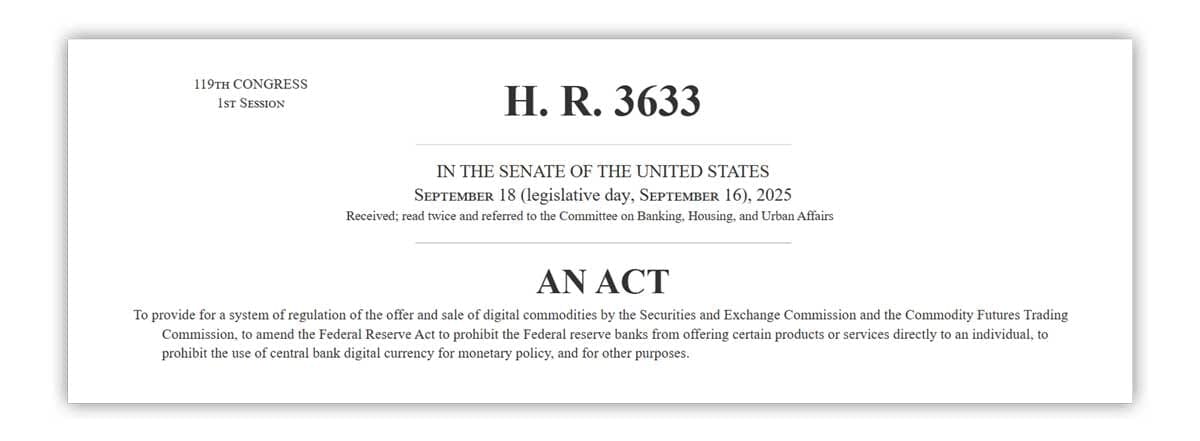
Which could put quadrillions of dollars in reach of everyday Americans...
The Sovereign Directive: Getting Ahead of Mandated Demand
I will be precise. I am not issuing a trade call in this piece. This is event analysis, not capital action.
What I am doing is mapping the real picture. Every Individual Sovereign reading this brief should see where mandated demand is being created by law. Not by consumer taste. Not by analyst hype. By statute.
Here is the framework.
The Cause-and-Effect Chain:
| Cause | Effect | Capital Impact |
|---|---|---|
| EU mandates safety-by-design with burden of proof on platforms | Platforms must buy or build age check systems | Required spend creates steady revenue for check providers |
| U.S. KIDS Act extends COPPA shields to under-17 users | Compliance scope grows to cover teenagers | Vendors serving U.S. markets gain a larger target market |
| FTC fines reach $53,088 per breach | Cost of ignoring rules exceeds cost of compliance | Platform buying speeds up based on penalty math |
| EU AI Act rules take effect December 2, 2026 | AI-made content must carry readable labels | Content tagging and metadata systems become required |
| EdTech market reaches $210 billion in 2026 with COPPA overlay | School districts require compliant vendor proof | Vendors without compliance systems lose bid access |
The firms in this supply chain — identity checks, zero-knowledge proof systems, wallet-based login, compliance tools — are not riding a trend. They are filling a gap coded into law. That law spans two of the three largest economic blocs on Earth.
From years watching enterprise buying cycles on the inside, one pattern never failed. Mandated compliance spend is the most stable revenue stream in business. It does not hinge on consumer mood. It does not hinge on quarterly guidance. It hinges on a law with a due date.
The due dates are here. The capital will follow. Your task is to be in place before the market finishes pricing it in.
That is the directive.
In partnership with Behind the Markets
Trump goes "all-in" on Grand Canyon energy breakthrough
Because last June, a drilling crew working right near the Grand Canyon…
Unearthed a well of clean energy producing almost 8 times the output of the largest oil well in Saudi Arabia…
Capable of powering civilization for two million years.
Right here on American soil.
Go here now for the Grand Canyon breakthrough ticker>>
Disclaimer: This analysis is for educational purposes only and should not be considered investment advice. Always do your own research before making investment decisions.
Items marked with an asterisk (*) are promotional and help support this newsletter at no cost to readers.