
The NATO Cash Machine: Mapping Where Defense Dollars Actually Land
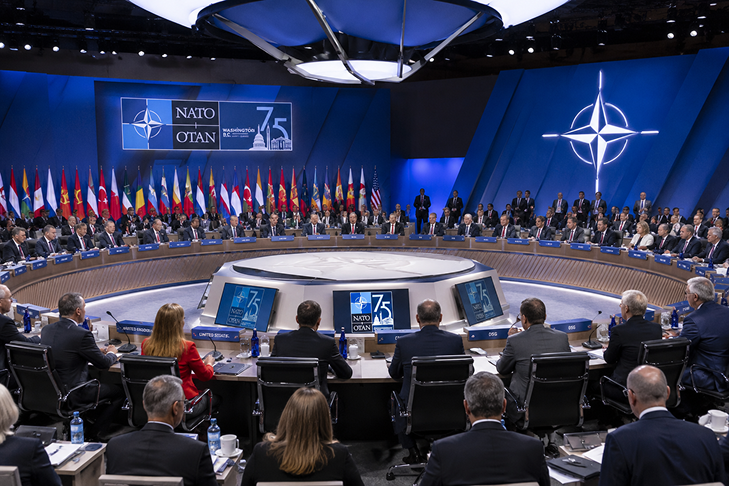
Ukraine just got licensed to build Patriots. The downstream implications for Raytheon and Lockheed are material.
The media gave us what it always gives us. Photo ops. Tension stories. Recycled quotes about "alliance unity." I have no interest in any of that. I want to know where the capital is going. Who gets it. And what it does to specific balance sheets.
Here is what the Ankara summit on July 7-8 produced in terms that matter:
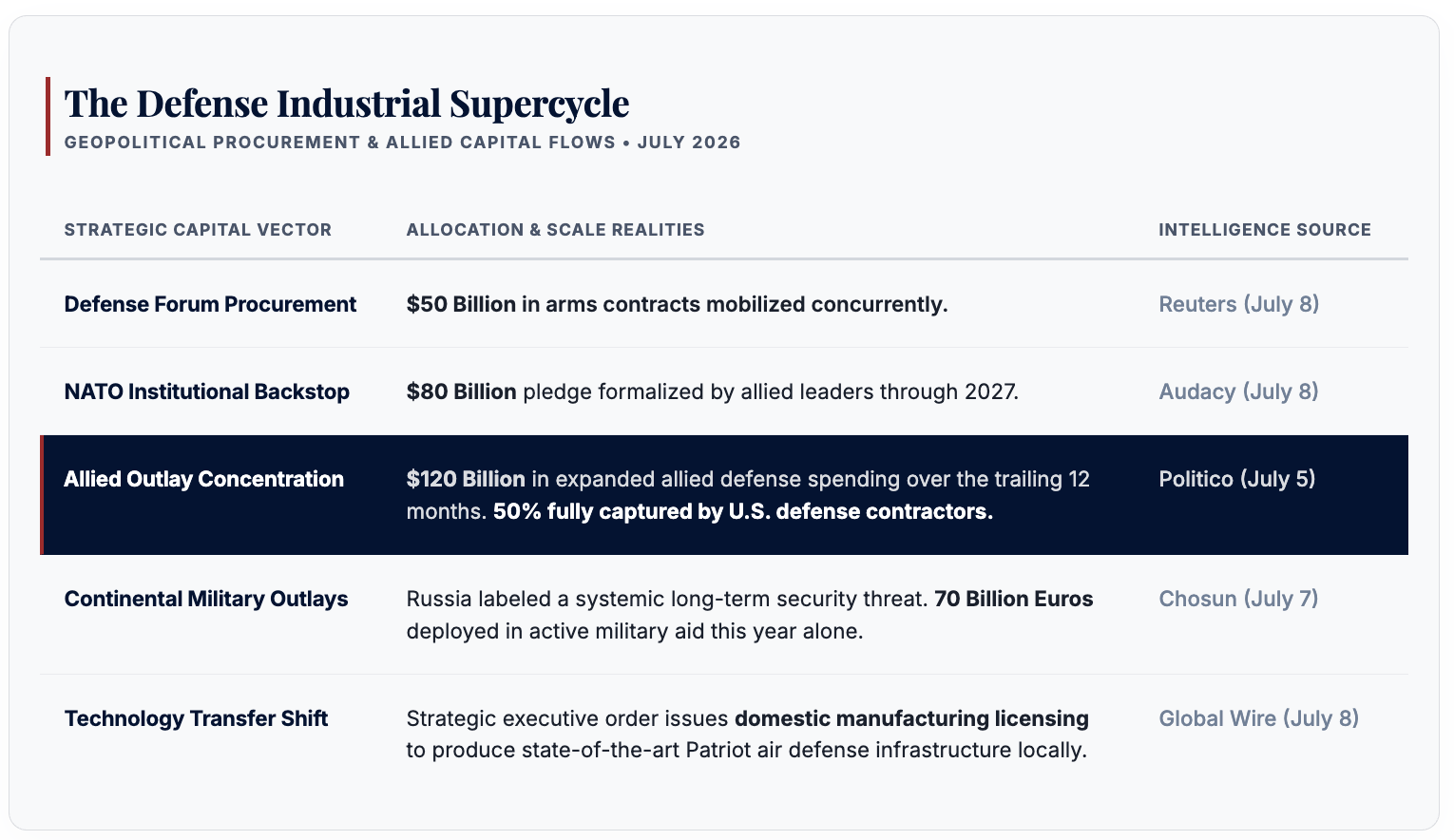
The total capital pledge from this single summit tops the last three NATO meetings combined. This is not a diplomatic event. It is a buying directive wrapped in a flag.
The question for Individual Sovereigns is simple. It is not whether defense spending is rising. That debate ended two years ago. The question is: which firms sit at the end of these cash flows? And do the current equity dips reflect noise — or real damage?
The Intelligence Brief: What the Media Claims vs. What Is Actually Happening at the Capital Layer
What the media claims: NATO is under strain. Trump is pushing allies away. The bloc is cracking over Greenland, Iran, and cost-sharing fights.
What is happening at the capital layer: NATO members now target 5% of GDP on defense. That was 2% just three years ago. The U.S. envoy to NATO confirmed allies spent $120 billion in new defense funds last year. He called it a "good start". NATO chief Mark Rutte noted that European orders already back 110,000 U.S. jobs through $300 billion in U.S. arms buys.
The friction is real. It is also beside the point for capital.
Trump's deal-making style — threats to leave NATO, 5% GDP demands, tying arms sales to spending — is not slowing the pipeline. It is speeding it up. The UK and Germany said they would build U.S. weapons at home under license. The Pentagon reshuffled its foreign sales offices to push defense exports harder .
Meanwhile, Korean defense stocks fell hard. Hanwha Ocean lost Canada's next-gen submarine bid. Hanwha Aerospace dropped 3.19%. Hanwha Systems fell 12.98%. Hyundai Rotem slid 4.75% on July 7 (Chosun). Shinhan Securities called it "a cash flow issue, not a core weakness." The export growth path still holds.
I have seen this pattern many times across two decades of corporate work: short-term selloffs inside a market that keeps getting bigger. The dip is the headline. The capital directive is the signal.
In partnership with Brownstone Research
I flew to South Memphis. What I found wasn't rockets.
Hi, I'm Jeff Brown —
I just came back from an industrial zone in South Memphis, Tennessee.

It is located almost 1,000 miles away from traditional technology headquarters.
Right there sits a windowless, heavily secured facility the size of 13 football fields.
This heavily fortified facility houses what infrastructure experts are calling the most powerful supercomputer of any kind in the world.
It is currently acting as the primary computational spine for a private tech startup that is growing 23 times faster than Nvidia.
I recorded the entire visual breakdown to show you exactly what is happening inside.
Watch what I found inside
The Tactical Strike: The Patriot License and the Defense Industrial Reordering
Trump's move to license Ukraine to build Patriot systems is not a goodwill gesture. It is a supply chain reset for global defense.
Look at the current output limits:
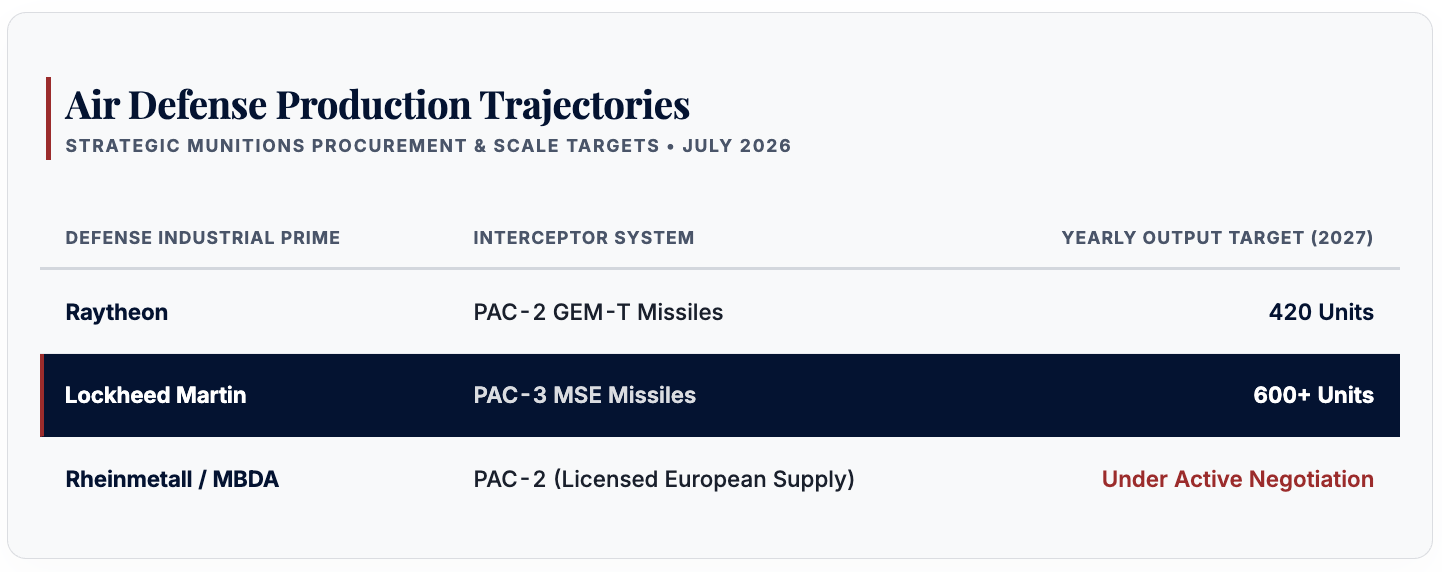
Ukraine's demand alone eats a large share of global Patriot stock. The country sent urgent letters to 40 allied nations asking for Patriot missiles. It is buying roughly 100 Patriot missiles for $1 billion with EU loan funds. A separate $4.5 billion deal with Germany covers more air defense rounds and launchers.
Now add the license. Trump said plainly: "We'll give them the right to make Patriots. We'll show them how to do it". He also noted the U.S. has "great power over the firms" that build these systems.
For Raytheon (RTX) and Lockheed Martin (LMT), this creates two effects:
- Near-term revenue boost from license fees, tech transfer deals, and parts supply contracts.
- Long-term capacity growth that eases the output crunch now blocking orders across all NATO buyers.
At the same time, Ukraine approved rules on July 1 to export home-built defense tech to allied nations. A 20% profit share flows back to the state budget. Ukraine's defense output stands near **$35 billion* and could hit $55 billion in 202.
Trump goes "all-in" on Grand Canyon energy breakthrough (Ad)
|
The Sovereign Directive: Placing Capital Within the Structural Expansion
Let me be precise. This piece is a macro and capital flow review. It is not a trade call. When I put my own capital to work on a specific setup, I share the exact details in a separate, clearly marked format.
What I am laying out here is the framework. Individual Sovereigns must judge it on their own terms.
The core thesis:
- NATO's total defense pledges now top $250 billion in new capital over the next 24 months. This comes from summit pledges, bilateral deals, and the 5% GDP target.
- The main winners at the factory level are U.S. defense primes (RTX, LMT, GD, NOC) and select European firms with licensed output deals.
- The Korean defense dip — caused by one lost submarine bid — came in a month where Hanwha Aerospace and LIG Defense had already gained 12.76% and 11.13%. The drop is event-driven. Not structural.
- Ukraine's defense tech base is a $6.8 billion funded market with $35 billion in output capacity. Venture capital barely touched it — just $57.2 million across 28 deals in 2025. This is a factory floor waiting for buyers and export rights. Both arrived this week.
The Sovereign Directive for this cycle is clear:
Strip the diplomatic theater from the capital directive. Every headline about NATO fights, Trump's tough talk, or allied tension is surface noise. Beneath it, the largest peacetime defense buying wave in modern history is being signed, funded, and locked in.
Your job as an Individual Sovereign is not to flinch at the headline. It is to find the balance sheets that absorb these cash flows. Check their prices against the growing market ahead. Then act — with the same rigor you once used on behalf of firms that would have cut you loose without a thought.
The capital is moving. The only question is whether yours moves with it.
— Patrick Gibson The Reclaimed Capitalist
In partnership with Weiss Ratings
Here is my 6-step plan to protect your wealth in times of chaos
|
You can also like:
- Trump’s new tech bill could put quadrillions (ad)
- Annual Economic Report 2026 (BIS)
- The $15 Gold Fund That Pays Up to $1,152/Month (from Investors Alley)
- Ford rehires ‘gray beard’ engineers after AI falls short (TechCrunch)
- Footage reveals Nvidia’s secret robot breakthrough (ad)
Disclaimer: This analysis is for educational purposes only and should not be considered investment advice. Always do your own research before making investment decisions.
Items marked with an asterisk (*) are promotional and help support this newsletter at no cost to readers.